Buying Guides
Heated Towel Rail Buying Guide: Styles, Sizing and Running Cost
The Aquaro Team · 2 October 2026 · 3 min read
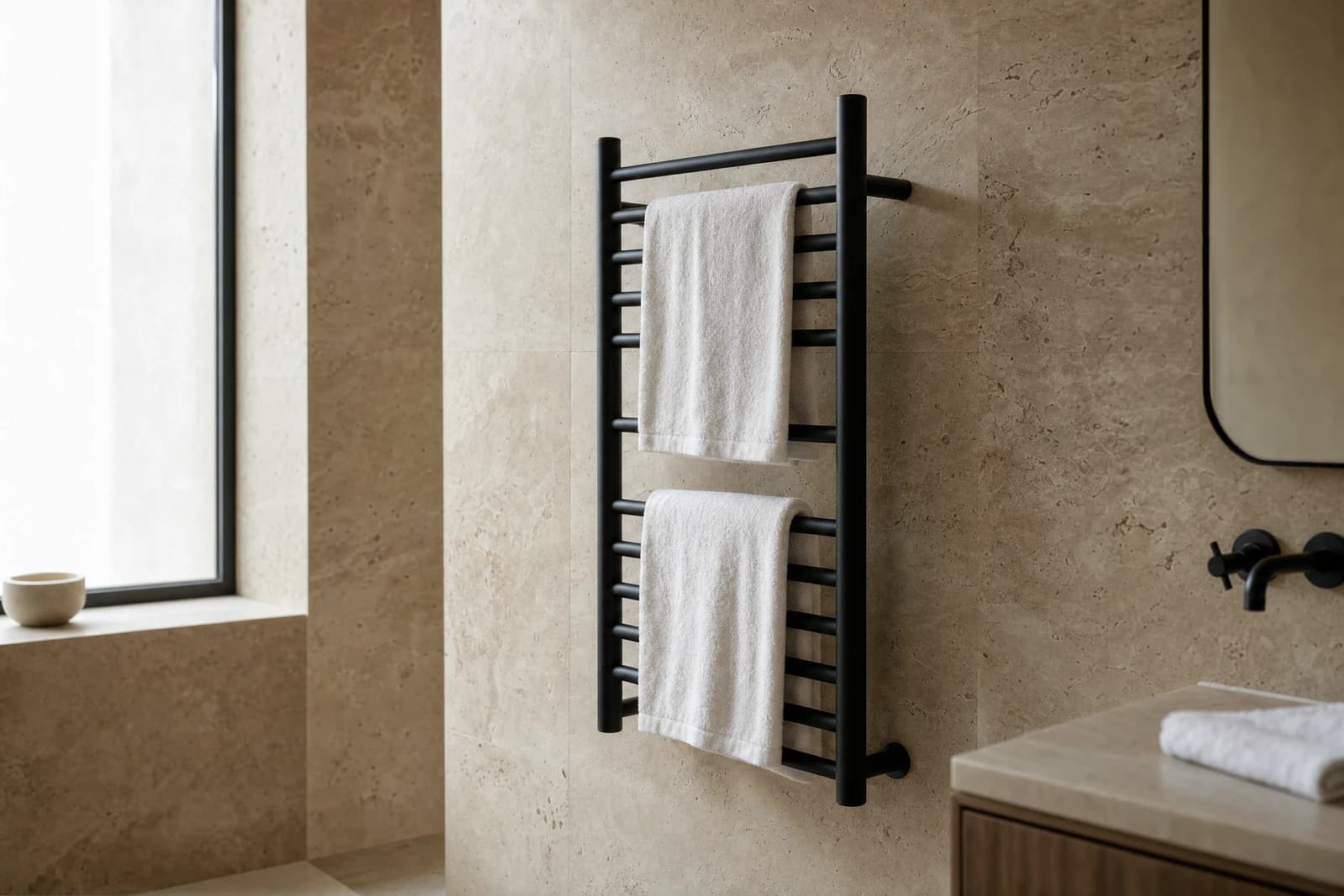
A towel rail is one of those fittings nobody thinks about until they're standing in a cold bathroom with a damp towel. Choosing one comes down to three decisions: heated or unheated, which style suits your wall space, and the right size for how many towels actually need to hang there day to day. Get those three right and the rest, finish and installation, is straightforward.
Heated vs unheated: is it worth it?
A heated towel rail does two things an unheated rail can't: it dries a damp towel between uses instead of leaving it musty, and it takes the chill off a towel on a cold morning. Most heated rails draw somewhere between 20W and 150W depending on size, broadly comparable to a couple of LED downlights, and the running cost stays modest when left on a timer rather than continuously heated. The genuine trade-off is upfront cost and, for a hardwired model, needing an electrician rather than a plumber for installation. For a main bathroom or ensuite used daily, the convenience is usually worth it; for a rarely used guest bathroom, an unheated rail is a reasonable way to save on both the purchase price and the install.
Ladder, round, square or swivel: which style suits your wall?
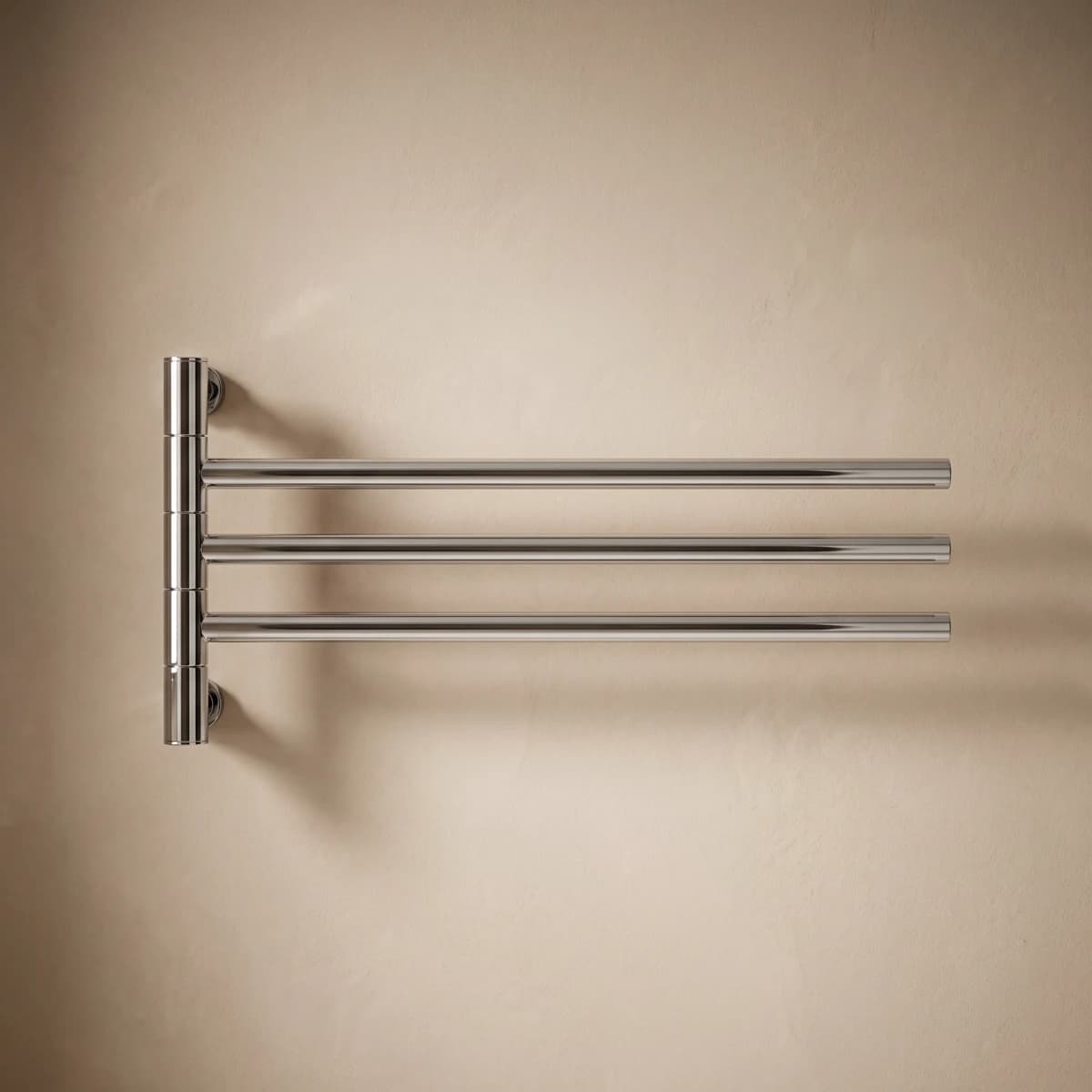
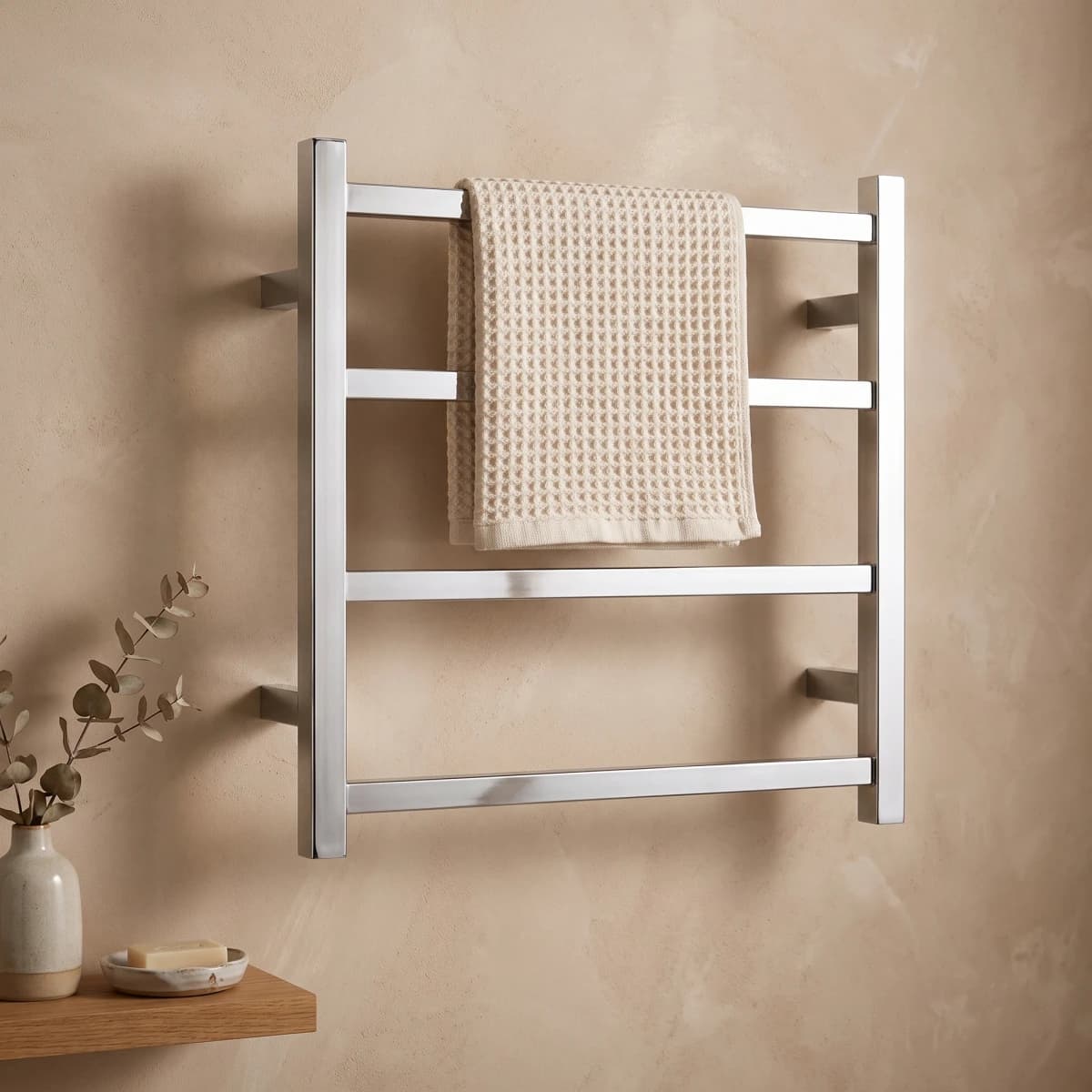
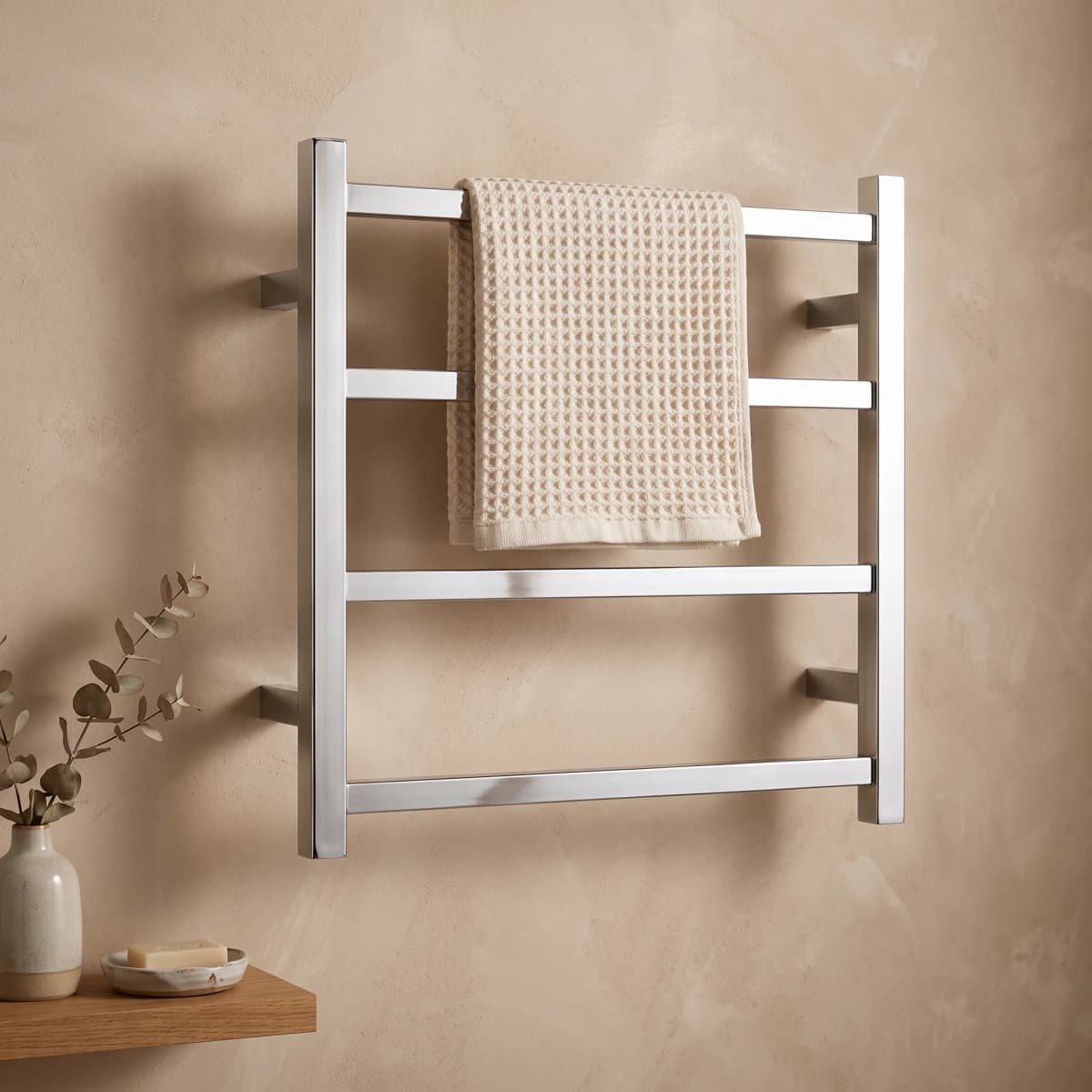
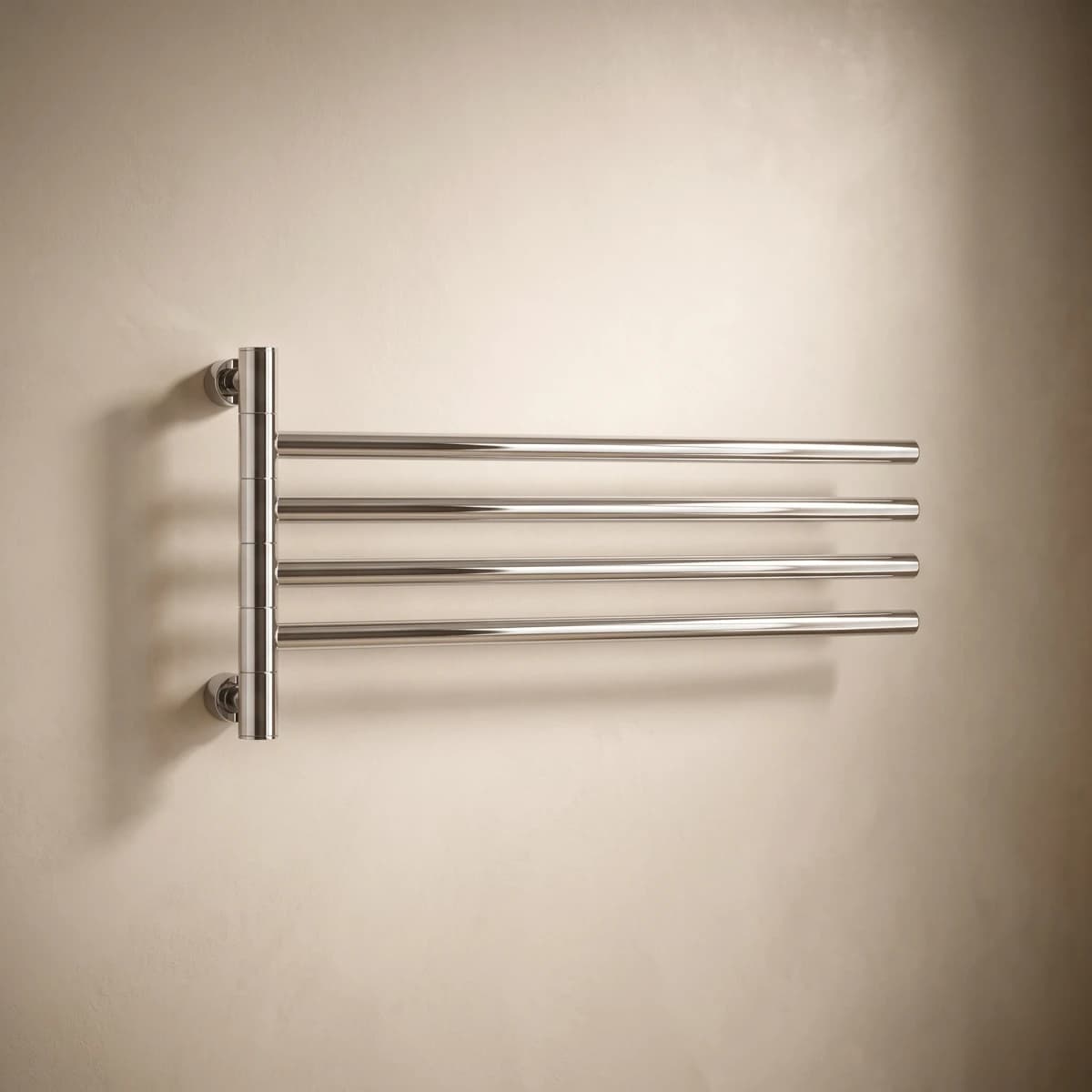
A ladder towel rail gives the most hanging space for its width, with evenly spaced horizontal bars across a wide frame, available in round, square and curved bar profiles. It's the natural choice for a main bathroom where more than one towel needs somewhere to hang at once. A round or square towel rail uses a more compact bar arrangement, often in fewer bars, which suits a narrower wall or a smaller powder room without crowding the space. A swivel towel rail, such as the Aquaro 4 Bar Swivel Towel Rail, has bars that fold flat against the wall when not in use and swing out to hang a towel, a good fit for a tight space where a fixed ladder rail would protrude too far into the room. For a particularly narrow wall, a vertical heated towel rail runs tall and narrow rather than wide, commonly fitted beside a vanity or in a powder room where a horizontal rail simply won't fit.
Sizing: how many bars do you actually need?
Count how many towels realistically need to hang at once, bath towels, hand towels and a bath mat, and size the rail to that rather than to the biggest model available. A single or double straight rail suits a hand towel or a single bath towel in a smaller bathroom or powder room. A 4 to 6 bar ladder rail comfortably hangs two bath towels with room to spare, the common choice for a main bathroom. An 8 or 9 bar rail suits a larger family bathroom or ensuite where towels for more than two people need somewhere to go. Measure your available wall width before deciding on a ladder rail specifically, since the frame width scales with bar count and a rail that's too wide for the wall is a common install-day surprise. Our tapware measuring guide covers the same careful-measuring approach for the rest of the bathroom.
Finish and installation
Every Aquaro towel rail is available in the same six finishes as the rest of the range, so it can be matched to your tapware and accessories rather than chosen in isolation. See our tapware finish guide for how to pick one finish that works across the whole room. For installation: a plug-in heated rail can generally go in with the plumbing or general trades work already underway, while a hardwired model (no visible cord, wired directly into the mains) needs a licensed electrician, which is worth confirming before you finalise a renovation schedule. Wall fixing points and rail depth are listed on each product's spec sheet, worth checking against your wall if it's an uneven or heavily tiled surface.
Shop the range
Browse heated and unheated towel rails in ladder, round, square and swivel styles, including the Aquaro 8 Bar Square Heated Towel Rail and Aquaro 5 Bar Round Heated Towel Rail, across the full Bathroom Towel Rails range. Each listing includes wattage (for heated models), dimensions and bar count on its spec sheet.
Frequently asked questions
- Is a heated towel rail expensive to run?
- Not for typical household use. Most heated towel rails draw somewhere between 20W and 150W depending on size, roughly in line with a couple of LED downlights, and the running cost is small when left on a timer rather than continuously. Check the specific wattage on the product's spec sheet, since it scales with bar count and rail size.
- What's the difference between a ladder and a round or square towel rail?
- A ladder towel rail has evenly spaced horizontal bars on a wide frame, giving the most hanging space per wall width. Round and square rails use a tighter, more minimal bar profile, often in fewer bars, which suits a smaller wall or a more compact bathroom. Both styles come in heated and unheated versions.
- Can a heated towel rail be installed vertically?
- Yes. A vertical (tall, narrow) heated towel rail suits a tight wall space, such as beside a vanity or in a powder room, where a wide horizontal ladder rail wouldn't fit. Confirm the model's full height and bar spacing against your available wall space before ordering.
- Does a heated towel rail need an electrician to install?
- Most plug-in heated towel rails can be installed by a licensed plumber or handy homeowner, but a hardwired model (no visible cord) needs a licensed electrician to connect it to the mains. Check which type you're buying before planning the install, since it changes who needs to do the work.
Shop the range
View all →