Buying Guides
Top Kitchen Tapware Picks for Renovators: Stylish, Water-Efficient Choices
The Aquaro Team · 1 October 2026 · 7 min read
Choosing a kitchen mixer tap sounds straightforward until you're standing in front of dozens of models across six finishes and a couple of certification standards you've never had reason to learn. Most renovators start with a vague idea ("something in matte black, maybe") and end up either paralysed by choice or locked into a tap that doesn't suit their sink, bench or water pressure. A confident shortlist really does come down to five variables, in this order: tap type, finish, sink and benchtop pairing, compliance, and budget. Get those right in sequence and the rest falls into place.
Which kitchen tap type suits your kitchen?
Settle this first, based on your sink depth, the clearance above your bench and how you actually use the kitchen, not on what looks best in a showroom photo.
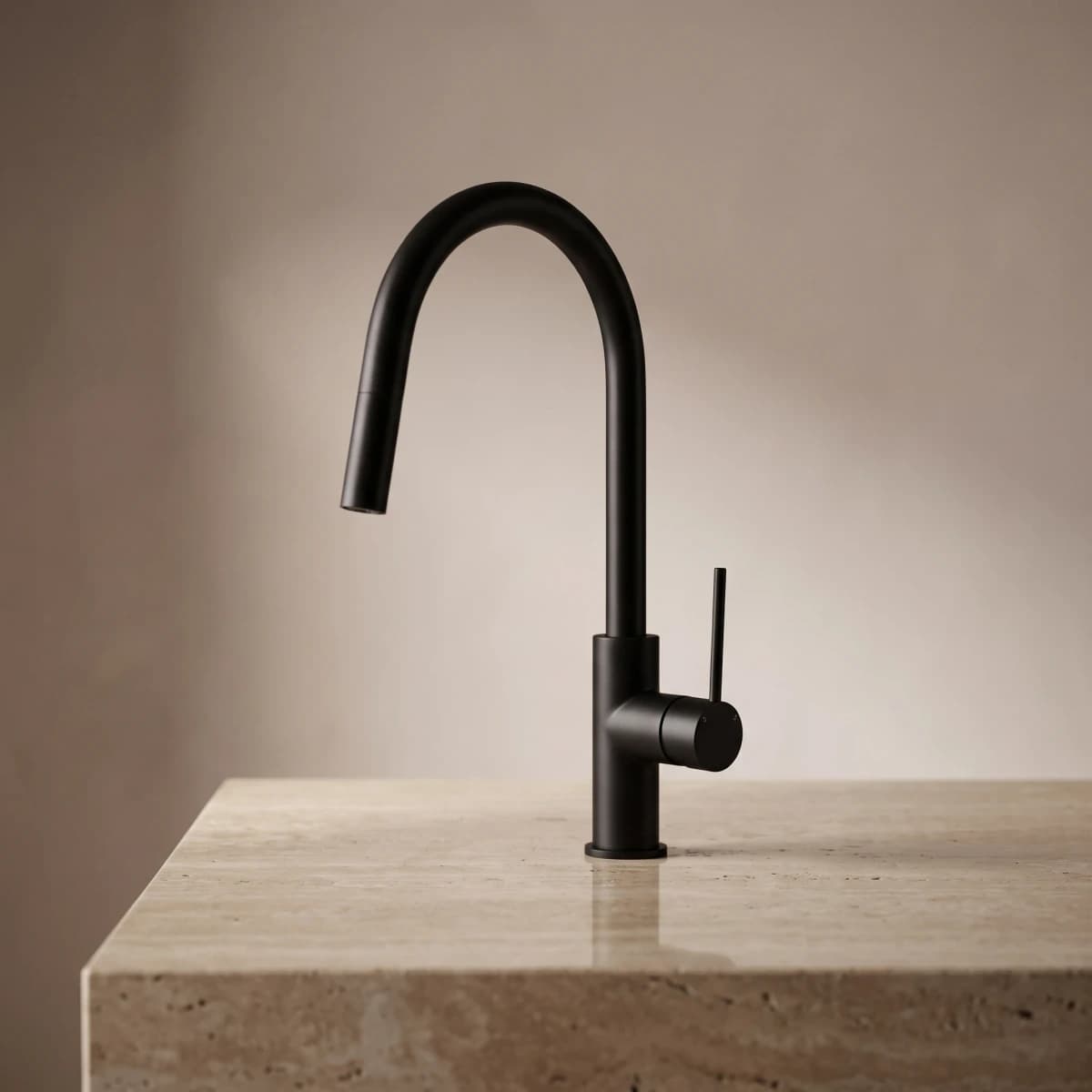
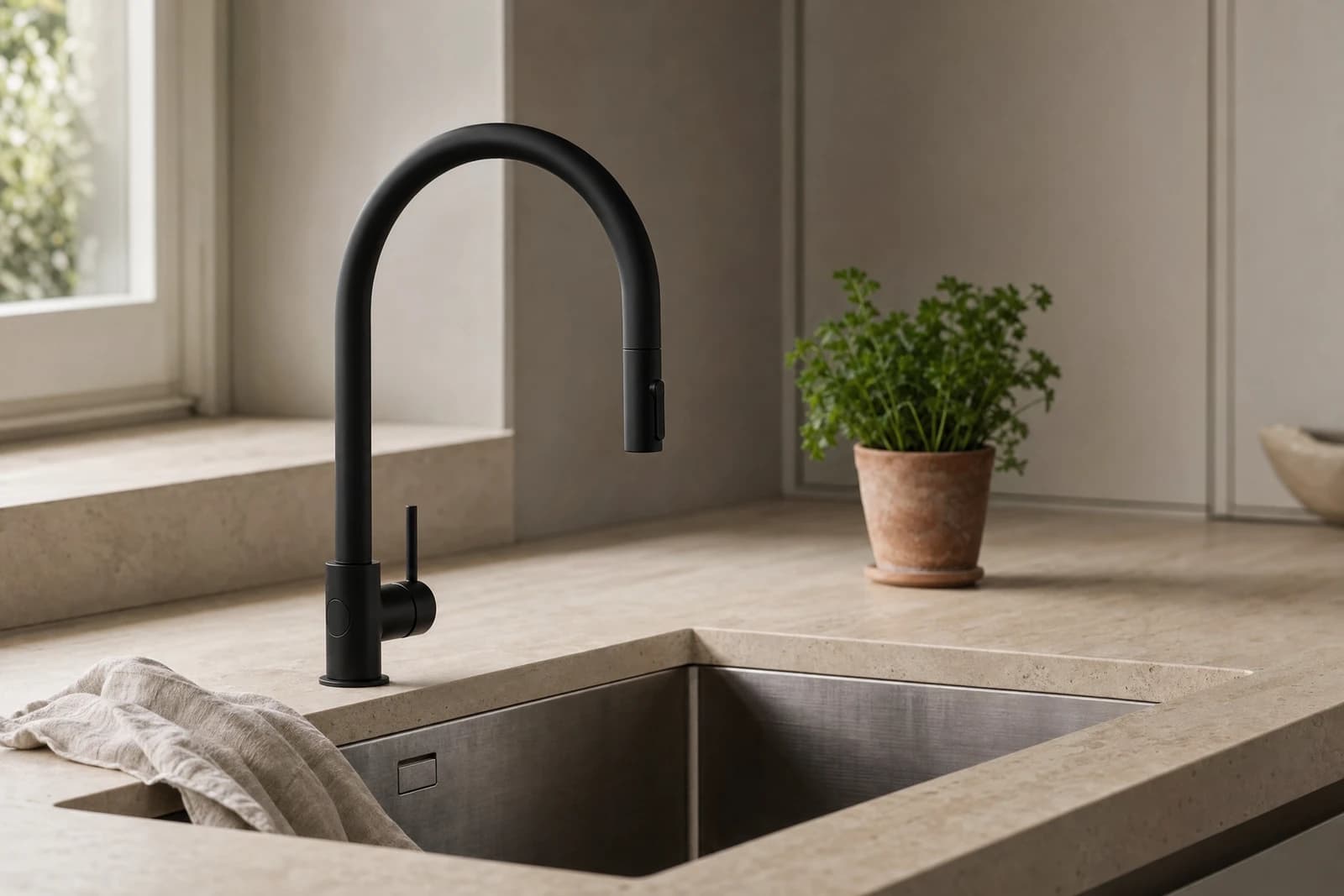
Pull-out vs pull-down. A pull-out tap like the Aquaro Pull-out Kitchen/Laundry Mixer has a lower profile and a hose that extends forward and sideways, which makes it a natural fit under overhead cabinetry or a window above the sink. A pull-down tap such as the Aquaro Coil Pull-Down Mixer has a tall, curved spout with a head that drops straight into the bowl, giving far more vertical clearance for stockpots and large cookware, but it needs overhead room and a deep sink so water doesn't splash back at you. Both designs add a hose mechanism with moving parts: the retraction weight, hose and internal seal are the components most likely to need attention over time. A fixed-spout mixer has none of those parts, which makes it the lowest-maintenance design of the three.
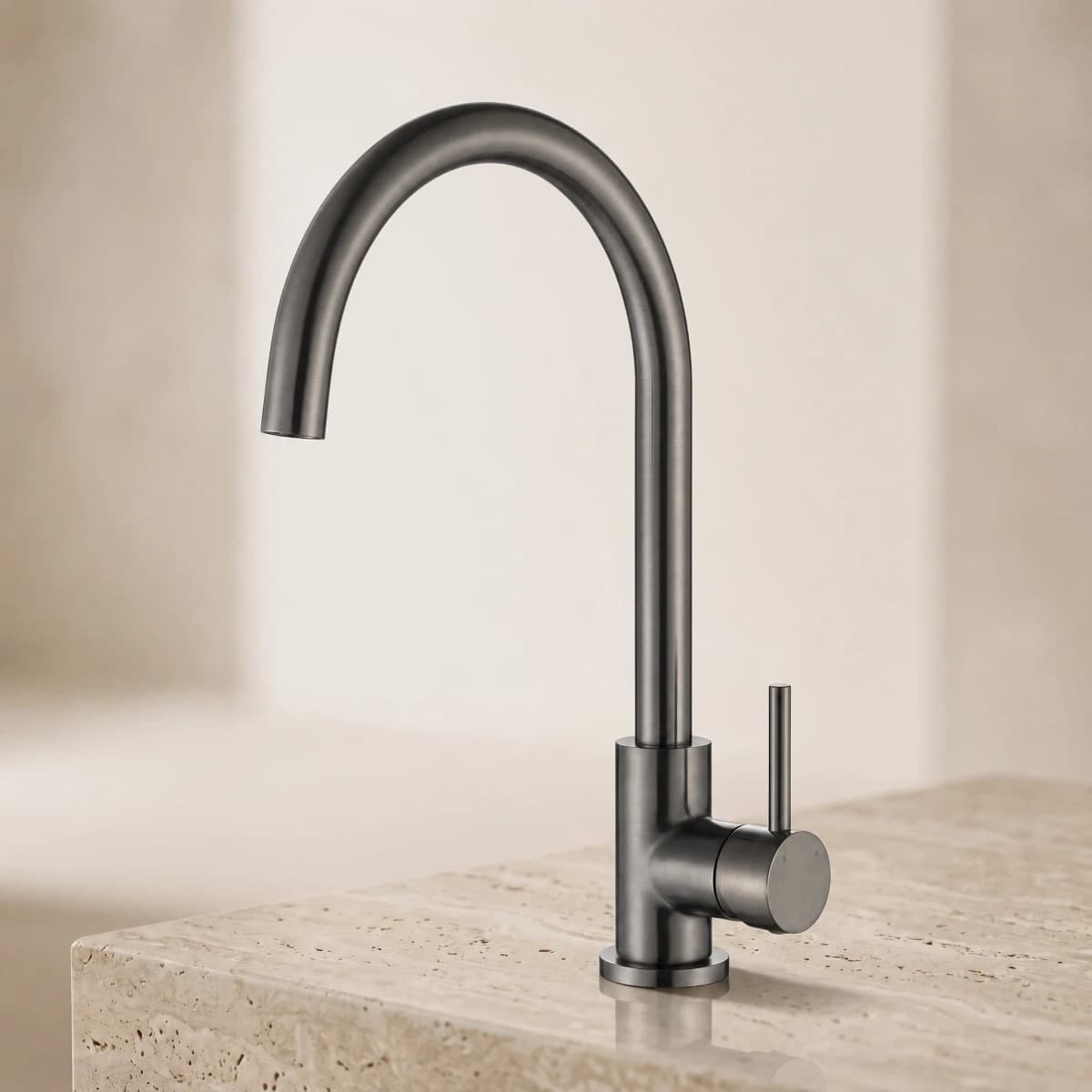
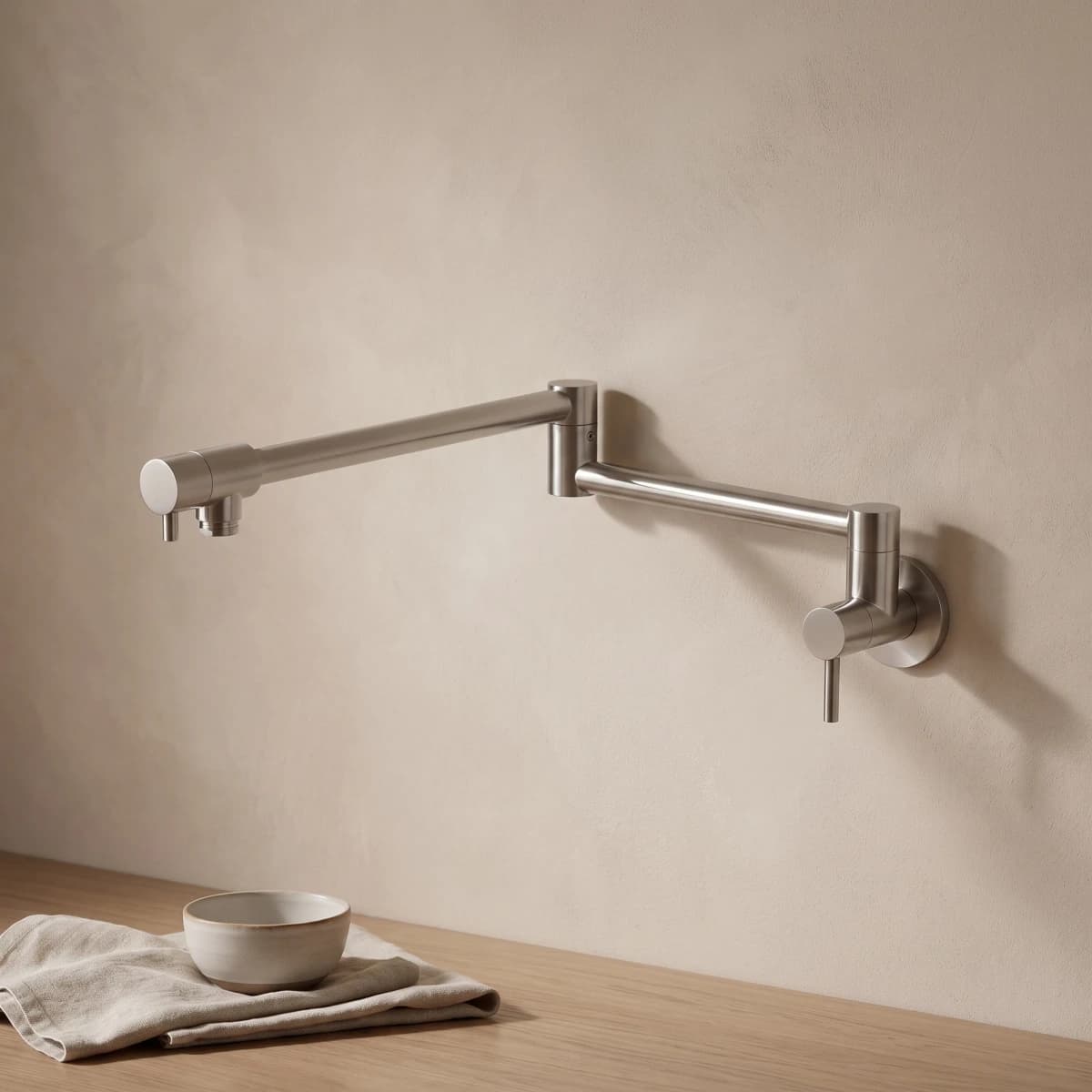
Gooseneck, wall-mounted and filter taps. A gooseneck mixer such as the Aquaro Round Kitchen Mixer with Long Spout offers an elegant high arch and easy clearance for tall containers, but can splash in a shallow sink under strong water pressure. Wall-mounted taps give an exceptionally clean benchtop, but need rough-in plumbing planned during the renovation itself. See our measuring guide for what to confirm before the wall is tiled. Retrofitting one after tiling and cabinetry is done is a significant, costly job. Filter taps deliver filtered drinking water directly from the tap, which is genuinely convenient, but the under-sink filter unit takes up cupboard space and cartridges need replacing every six to twelve months.
Finishes that hold up in a real kitchen
A finish that looks stunning in a product photo can look worn well before its time if the coating quality isn't there. Daily splashing, hard water, cleaning products and constant handling all take a toll, so durability belongs in the decision, not as an afterthought.
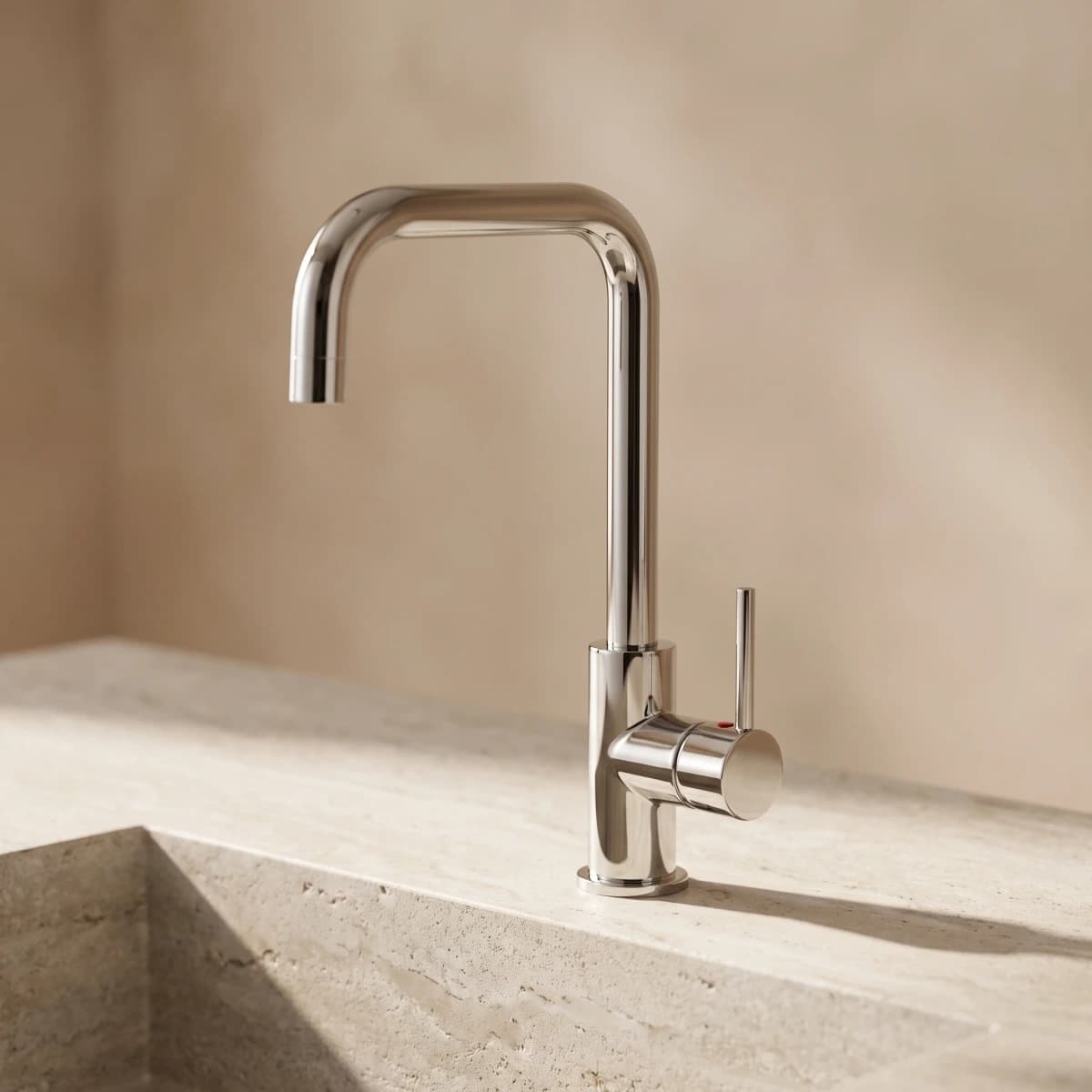
Brushed Nickel is the practical standout for a busy kitchen. Its directional texture disguises fingerprints, water marks and minor surface scratches better than most other finishes, which means less daily wiping. Chrome is the most chemically resilient finish and has the widest replacement-parts availability, but every water droplet and fingerprint shows, so it demands more frequent drying. Matte Black hides water spots well and suits a contemporary kitchen, but only stays looking good long-term when it's genuinely PVD-coated rather than spray-painted or lacquered.
PVD (Physical Vapour Deposition) bonds colour to the metal at a molecular level, producing a coating significantly harder and more resistant to scratches, corrosion and fading than electroplated or lacquered alternatives. The difference shows up most clearly in warm, humid environments and with regular cleaning. Every Aquaro finish across the range, including Brushed Gold, Gunmetal and Antique Brass, uses this process, so it's one less thing to check model by model. Whatever the finish, the cleaning rule is the same: warm water, a soft microfibre cloth and mild detergent. Bleach, abrasive pads and acidic descalers damage decorative coatings and can void a warranty. See our guide to choosing a tapware finish for how each one performs under daily use.
Pairing your tap with your sink and benchtop
The sink and benchtop anchor the finish choice. A Matte Black tap against a stainless steel sink is a popular contemporary pairing in Australian kitchens, working in contemporary, industrial and monochrome schemes without feeling forced. Brushed Gold with a stone or concrete benchtop creates a warm, architectural quality. Chrome with a white composite or undermount sink is the timeless, universally safe choice that presents well in any resale. Brushed Nickel bridges natural materials particularly well against timber-accented cabinetry, softer than chrome and warmer than matte black, without competing with the grain.
Start with the sink material (stainless, composite or stone) as the fixed point, then align the tap finish with cabinet hardware and the rangehood. The goal is a pulled-together scheme, not a matching one: slight variation in tone or texture across fixtures reads as intentional design rather than inconsistency. For renovators sourcing a sink mixer, filtered tap and accessories separately, keeping them to one range meaningfully reduces the risk of a finish mismatch under real kitchen lighting.
WELS ratings and WaterMark compliance
The star rating on a WELS label tells one part of the story; the litres-per-minute figure beside it tells the rest. A 5 Star WELS kitchen mixer delivers between 4.5 and 6 litres per minute under standard test conditions, a 4-star tap sits in the 6 to 7.5 L/min band, and a 3-star tap in the 7.5 to 9 L/min range. Three stars is generally the minimum aligned with plumbing code guidance, but a 5-star tap delivers meaningful water savings without noticeably compromising rinsing or pot-filling at normal household pressure. Where a very low-flow model can feel inadequate is filling a large stockpot or rinsing a colander under pressure, so weigh the flow rate against how you actually use the kitchen. See our WELS ratings guide for how to read a label properly.
WaterMark certification is a separate, non-optional requirement: it's what makes a tap legal for a licensed plumber to install under the Plumbing Code, and a tap without it creates compliance and warranty problems down the line. Confirm the WaterMark licence number appears on the product or its packaging, not just in a marketing description on a website. The relevant Australian Standards are AS/NZS 3718 for water supply taps and AS/NZS 3662 for some sanitary tapware. For any kitchen tap that contacts drinking water, it's also worth requesting the manufacturer's current lead-compliance documentation, particularly for imported or online-only products where compliance records aren't always readily available.
What a realistic kitchen tapware budget looks like
At the budget end, between $50 and $200, you'll find basic chrome or simply coloured mixers with standard ceramic cartridges. These suit a rental or a short-term reno, where practicality outweighs aesthetics. The mid-range, from $200 to $700, is where most renovators spend: construction quality improves, warranties lengthen, pull-out spray options become available and genuine water-saving features appear alongside a broader choice of finishes. Premium products from $700 upward offer designer styling, PVD finishes across multiple colour options, architectural spout profiles and advanced integration such as filtered or boiling-water systems. Installation typically adds a further $100 to $300 depending on access, plumbing changes and location, so factor that into the total budget from the outset rather than treating it as a surprise at the end.
Compatibility checklist: what to confirm before you order
The most common failure point in a kitchen reno is a tap ordered without confirming physical compatibility, only for a plumber to find the mounting nut won't reach through the bench thickness. Our tapware measuring guide covers the same checks for basin and wall mixers, if you're sourcing bathroom tapware at the same time.
- Sink hole size. Most mixers suit a 30-35mm single hole, but some bench configurations differ, so measure the bare hole diameter before ordering.
- Benchtop thickness. Most stone benchtops are around 20mm, but layered or reinforced surfaces can be substantially thicker, and the tap's mounting nut has to reach all the way through.
- Spout reach and swivel range. A 180mm reach won't effectively rinse a 600mm double sink, and a fixed spout that can't reach the secondary bowl becomes a daily frustration.
- Water pressure. Confirm the tap's minimum and maximum operating pressure against your home's water supply. Most residential systems run between 150 and 500 kPa. This matters most for pull-out and pull-down models, where pressure outside the tap's range affects both performance and the hose mechanism's longevity.
Once a tap is installed, verify its WELS registration in the official product database, confirm the WaterMark licence number is on the product or its packaging, and keep the installation certificate, invoice and warranty documentation together. It's also worth asking whether cartridges, aerators and replacement hoses for your chosen model are locally stocked, so a worn part years from now is a quick fix rather than a search.
Shop the range
Aquaro's kitchen tapware spans pull-out and pull-down mixers in six matching finishes, each WELS-rated and WaterMark certified, including the Aquaro Pull-out Kitchen/Laundry Mixer. Browse the full Kitchen & Laundry Tapware range to compare tap types and finishes side by side, and check spec sheets for exact hole size, spout reach and WELS rating before you order.
Frequently asked questions
- What's the difference between a pull-out and a pull-down kitchen tap?
- A pull-out tap has a lower profile with a hose that extends forward and sideways, which suits overhead cabinetry or a window above the sink. A pull-down tap has a tall, curved spout with a head that drops straight into the bowl, giving more vertical clearance for stockpots, but it needs overhead room and a deep sink so water doesn't splash back.
- Do I need a WaterMark certificate as well as a WELS rating?
- Yes, they cover different things. WELS tells you how water-efficient a tap is; WaterMark certification is what makes it legal for a licensed plumber to install under the Plumbing Code. Check for a WaterMark licence number on the product or its packaging, not just a mention on a website, before you buy.
- Which kitchen tap finish is easiest to maintain?
- Brushed Nickel is the most forgiving for a busy kitchen: its directional texture hides fingerprints and water marks better than a polished finish. Chrome is the most chemically resilient and has the widest parts availability, but shows every water droplet. Matte Black hides water spots well, provided it's a genuine PVD coating rather than a sprayed or lacquered finish.
- Can I fit a new kitchen mixer into my existing sink without a plumber?
- Measuring and choosing a replacement is fine to do yourself, but connecting to or altering the water supply is licensed plumbing work in every Australian state. Confirm your sink's hole size and benchtop thickness against the tap's fixing kit before ordering, then have a licensed plumber handle the actual installation.